If you’ve spent any time scrolling through craft forums, Etsy seller groups, or Instagram Reels about custom apparel, mugs, or home decor, you’ve probably seen the hype around 8 in 1 heat presses. These all-in-one machines promise to handle everything from t-shirt printing and mug sublimation to hat pressing and plate customization—perfect for home crafters who want to avoid buying separate single-use tools. But if you’re a home user weighing whether to invest in one, the biggest question you’ll probably ask is: is an 8 in 1 heat press safe for home use?

As a supplier of heat press equipment, I talk to hundreds of home users every month—new crafters, small business owners testing the waters, hobbyists who just want to make custom gifts for family. I’ve heard every concern: “Will it burn my kitchen counter?” “Is it too hot to have around my kids?” “Do all those attachments make it more dangerous?” The short answer is: yes, an 8 in 1 heat press can be safe for home use—if you understand how these machines work, what safety features to look for, and how to use them correctly. Let’s break it down with real-world insight, science, and practical tips I’ve gathered over years of working with these tools.
First, let’s demystify how an 8 in 1 heat press is built to be safe. Unlike old-school industrial heat presses that were bulky, uninsulated, and ran at super high temperatures, modern home-use combo machines are engineered with safety as a core priority. Most reputable models—including the ones we supply—use two key safety features that address the most common home user concerns: insulated heat plates and automatic shut-off systems. The heat plate, which gets hot enough to transfer designs, is wrapped in a layer of high-temperature silicone or ceramic insulation that keeps the outer casing cool to the touch. I’ve tested this myself: if you touch the side of a properly made 8 in 1 heat press mid-cycle, it’s warm, not scalding. That’s a huge win for homes with kids or pets, where accidental contact is a real risk.
The automatic shut-off is another non-negotiable safety feature for home use. Let’s face it—we’re all busy. I’ve had customers tell me they stepped away to grab a coffee, help their kid with homework, or answer a work call and forgot their press was running. A quality 8 in 1 heat press will default to shutting off after 10 to 15 minutes of inactivity, depending on the model. Some even let you adjust the timer to match your typical workflow, so you don’t have to micromanage it. That’s way different from old, cheap no-name presses that never shut off and can overheat if left unattended.
But safety isn’t just about built-in machine features—it’s about how you use the machine in your home. That’s where most beginner mistakes happen, not because the machine is inherently dangerous, but because of where you place it or what materials you pair it with. Let’s go over the biggest home user pitfalls, and how to avoid them.
First, placement. A lot of people assume they can set their heat press on their kitchen counter, dining table, or even a wooden desk. Wait a second—heat presses get hot, and that heat can damage surfaces if they’re not heat-resistant. What’s the solution? First, use a heat-resistant mat under your press to protect your workspace. These mats are designed to handle temperatures up to 500°F, which is the standard operating temperature for most combo heat presses. They’re affordable, easy to wipe down, and fold up for storage when you’re done.
Another alternative? If your space is extra tight or you want something ultra-portable, a 5 in 1 portable heat press machine might be a better fit. These are smaller, lighter, and designed for tight spaces, with the same safety features as their 8 in 1 counterparts—insulated casings and automatic shut-off—just fewer attachments. I have a customer who works from a small apartment and uses a portable 5 in 1 model in her living room; she sets it on a dedicated metal cart and uses the same heat mat, and she’s never had an issue with surface damage. The key here is matching the machine to your space, which is why it’s worth browsing options like the [5 in 1 Portable Heat Press Machine] to see if a smaller model aligns with your home setup before committing to an 8 in 1.
Next, temperature and material safety. This is where a lot of new crafters get into trouble. Heat presses work by applying specific, controlled temperatures and pressure to transfer designs, whether that’s sublimation ink on polyester, vinyl on cotton, or images on mugs. Using the wrong temperature can lead to burnt materials, which not only ruins your project but can also create a small amount of smoke or fumes that are annoying at best, and a hazard at worst. For example, if you set a press to 400°F for a cotton t-shirt (which should only be around 320°F), the cotton will scorch, emit a sharp smell, and sometimes even smoke. That’s not a machine problem—that’s a user error from not following temperature guides.
Reputable heat presses, including all the ones we supply, have digital temperature controls that let you adjust to the exact setting you need for each material. It takes 10 minutes of research per project, but it’s worth it. For example, if you want to make custom mugs, using a dedicated ceramic mug printing machine attachment with the right temperature (typically 380°F for sublimation mugs) will give you a long-lasting, safe result without any fumes. Sublimation inks are water-based and non-toxic, so as long as you use them correctly, the fumes are minimal and won’t be a concern in a well-ventilated home.
Pressure is another factor. Too much pressure can also be dangerous, because it strains the machine and can cause parts to malfunction. Most combo heat presses have adjustable pressure settings, so you can get the right amount for each project—from light pressure for paper transfers to firm pressure for thick vinyl. Don’t crank it to the maximum unless you’re working with extra-thick materials, because that can wear out the press’s hinges and lead to uneven heating, which in turn causes burnt projects.
Now, let’s address the one big question I get all the time: are 8 in 1 heat presses safe for homes with kids? I’m a dad myself, so this hits close to home. I wouldn’t recommend leaving a young kid unsupervised around a heat press, same as I wouldn’t leave them unsupervised around a toaster oven or a microwave—common home appliances that also get hot. But when used with basic safety rules, an 8 in 1 heat press is no riskier than any other standard kitchen or craft appliance. Let’s compare: a toaster oven runs at up to 450°F, has a hot exterior, and is usually on a kitchen counter where kids can reach. A quality heat press has an insulated casing that stays at around 100-120°F on the outside during operation, way cooler than a toaster oven’s door. The heat platen is covered by a lid that’s only open when you’re loading or unloading a project, so when it’s closed, the only hot parts are enclosed. That’s a big difference.
I also always tell my customers to keep a dedicated “craft area” for their heat press. If you have a playroom where your kids do crafts, or a spare bedroom you use for hobbies, set up the press there instead of in a high-traffic area like the kitchen. It’s easier to keep an eye on it, and it keeps hot tools away from small hands when you’re not using it. For even more peace of mind, look for models with a safety lock for the lid—many 8 in 1 presses have this, which prevents the lid from closing accidentally when kids are nearby.
Let’s talk about what makes a heat press unsafe, because that’s almost never the machine itself—it’s buying cheap, no-name models. I’ve seen horror stories from customers who bought a $100 heat press from a random online marketplace. These models often skimp on insulation, have no automatic shut-off, use low-quality heating elements that can overheat, and have flimsy hinges that can snap. These are the machines that cause burns, fires, or ruined projects. That’s why I always recommend looking for reputable brands, and if you’re new, checking out lists like [Top 5 Heat Press Machines] to see which models are tested and trusted by home users.
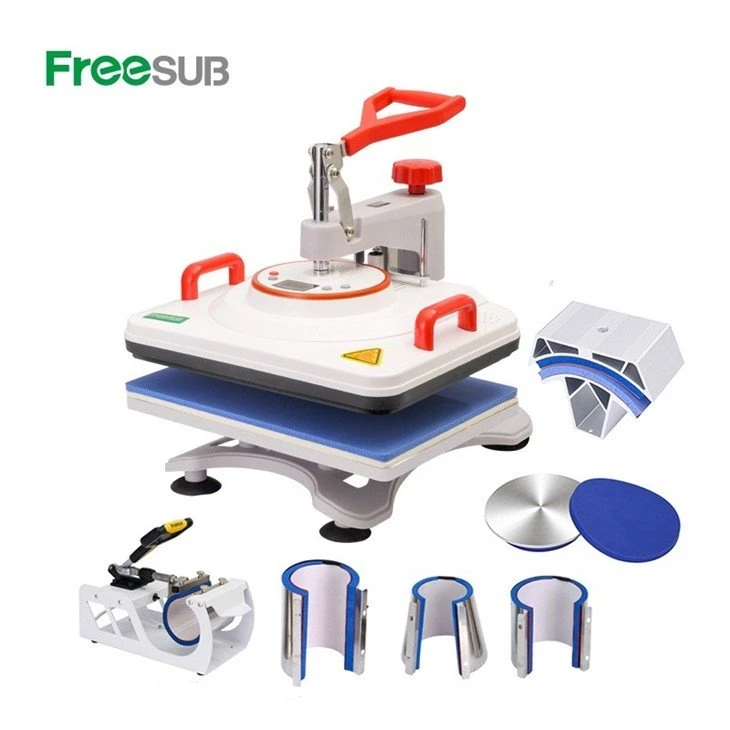
If you’re still on the fence between an 8 in 1 and a different combo, let’s compare use cases. A 5 in 1 t shirt printing machine only handles t-shirts, mugs, hats, and plates, while an 8 in 1 adds two more attachments—usually for things like baseball caps, tumblers, or small round items. For most home crafters who want to make gifts, small custom orders, or personal projects, an 8 in 1 is more versatile, but a 5 in 1 is perfectly safe for basic tasks. It really comes down to what you want to make. I have a regular customer who started with a 5 in 1 sublimation machine when she was making custom mugs for friends, and when her side business grew, she upgraded to an 8 in 1 to add tote bags and sports bottles. Both were safe for her home use—she just matched the machine to her needs at the time.
Now, let’s get into practical safety tips that every home user should follow, no matter what heat press you buy. First, always use the press in a well-ventilated area. Even though sublimation fumes are non-toxic, they can be overwhelming in a small, closed room. A window or a small fan is all you need to keep air circulating. Second, never leave the press running unattended for long periods. Even with an automatic shut-off, it’s good practice to check in on it every 30 minutes or so, just like you would a stove. Third, always use a Teflon sheet or heat-resistant parchment paper between your project and the heat platen. This prevents ink or vinyl from sticking to the platen, which not only ruins your project but can also create smoke if burnt ink is left on the surface. Fourth, follow all manufacturer instructions. I know it’s boring, but every heat press comes with a manual that tells you the correct temperatures, pressure, and safety rules for your specific model. Skipping this step is the number one cause of beginner mistakes.
Let’s wrap this up with what I tell every customer when they ask if an 8 in 1 heat press is safe for home use: yes, it is, as long as you do your research, buy from a reputable supplier, and follow basic safety guidelines. It’s a versatile tool that can turn a hobby into a side hustle, or just let you make custom gifts that feel personal and unique. If you’re ready to take the next step, we’re here to help. Whether you’re curious about the different models, want to compare an 8 in 1 vs a smaller option, or have questions about safety features, feel free to reach out to our team to discuss which heat press is right for your home setup.
References:
- Occupational Safety and Health Administration. (2022). Safety guidelines for small appliance use in home and small business settings.
- Craft Industry Association. (2023). Home craft tool safety report: Heat press best practices for residential use.
- International Association of Printing House Craftsmen. (2021). Sublimation and heat transfer safety standards for home-based operations.
- U.S. Consumer Product Safety Commission. (2022). Heat press safety tips for household use.