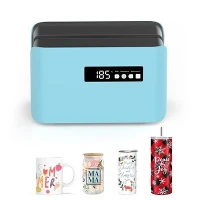
1. Thermal transfer is a new method for printing patterns on products of various materials, especially suitable for producing a small number of personalized and customized products, and printing patterns containing full-color images or photos. The principle is to print the digital pattern on a special transfer paper with a special transfer ink through a printer, and then use a special transfer machine to accurately transfer the pattern to the surface of the product at high temperature and high pressure to complete the product printing.
2. Thermal transfer technology can also use a variety of different transfer materials to achieve different printing effects, the most important ones are film transfer and sublimation transfer. The transfer paper transferred by the glue film contains glue, and then the glue pattern is printed on the surface of the product by means of high temperature and high pressure. Cooler.com uses high-quality imported transfer paper and ink. The printed layer of colloidal pattern is very thin, breathable, non-sticky, non-cracking, washable and non-shedding; it is different from the domestic transfer paper used in many shops, The printed glue pattern is thicker and often has the shortcomings of stickiness and cracking. The 100% cotton clothes of Coolle.com are printed using film transfer technology. Sublimation transfer is a new generation technology, using special sublimation ink and sublimation transfer paper. The pattern printed on the product will not produce glue. If it is transferred to the clothes, the ink is directly sublimated into the clothes fiber, the durability is the same as that of cloth dyeing, and the color is sharp, which is more suitable for colorful patterns.
3. Products that can be thermally transferred Not all products can be printed with thermal transfer, which involves factors such as the heat resistance, smoothness, etc. of the product. Due to the continuous advancement of technology, products that have been maturely developed using thermal transfer technology include: clothes, cloth bags, hats, pillows, mugs, tiles, watches, mouse pads, coasters, hanging calendars, medals, Hundreds of commodities such as pennants and... Kule.com will use the latest thermal transfer and other technologies to continue to develop more personalized products, from head to toe, from wear to use, to satisfy your desire for uniqueness.
4. Textile transfer printing Common textile transfer printing techniques are film transfer printing and sublimation transfer printing.
(1) As of 2013, the sublimation transfer technology is mainly only applicable to clothes with polyester fiber (polyester) on the surface, such as quick wicking shirts and physical comfort shirts, and white clothes are the best (the position where the pattern is printed is white, But other parts of the clothes can be other colors, such as color sleeves). After the colored clothes are digitally sublimated, the ink and colored fibers will merge, which will make the color of the pattern different from the original, so it is not recommended.
(2) The film transfer technology is mainly used for clothes with extremely high cotton content. Adhesive film transfer can be used in various colors, but dark clothes need to use higher-priced "dark clothes special transfer paper", which has heavier glue and unstable quality. Kule.com will not release dark-colored clothing transfers for the time being, and will release it when the technology becomes more mature. The transfer of ceramic products Ceramic products use thermal sublimation transfer. At a high temperature of about 200 degrees Celsius, the ink is sublimated onto the product, with sharp colors and high pattern reliability. However, ordinary mugs cannot be directly transferred, and the pattern can be transferred only after a special treatment of a coating (coating).
5. A digital printing machine that can print on any relatively flat materials such as leather, textile fabrics, plexiglass, metal, plastic, crystal, wood products, copperplate paper, etc. Requires plate making, color registration and complex exposure procedures, which will not cause damage to the material.